Introduction
In the era of Industry 4.0, manufacturers are under constant pressure to increase speed, precision, and efficiency while reducing operational costs. One of the most critical yet often overlooked components enabling this transformation is the vacuum suction cup.
From robotic pick-and-place systems to high-speed packaging lines, vacuum suction cups ensure secure gripping, minimal product damage, and consistent performance. For industrial buyers, OEMs, and automation engineers, selecting the right suction cup is not just a component decision—it directly impacts productivity, downtime, and ROI.
Leading global brands like PISCO offer advanced vacuum solutions trusted across electronics, automotive, semiconductor, and packaging industries.
What Are Vacuum Suction Cups?
Vacuum suction cups are pneumatic gripping devices that use negative pressure to lift, hold, and move objects. They are a core part of vacuum handling systems and are widely used in:
Industrial automation systems
Robotics and cobots
CNC machinery
Packaging and logistics
How Do Vacuum Suction Cups Work?
The working principle is simple yet highly effective:
A vacuum generator (ejector or pump) removes air from the cup
Negative pressure is created inside the cup
Atmospheric pressure pushes the cup against the object
A secure seal enables lifting and movement
Key Components of a Vacuum Suction Cup System
Elastomer Cup: Flexible material ensuring airtight sealing
Connection Nipple: Connects to vacuum line
Vacuum Generator: Creates suction force
Mounting Adapter: Integrates with robot or machine
High-quality systems from PISCO are engineered for leak-free performance and long lifecycle operation.
Types of Vacuum Suction Cups (Industrial Applications)
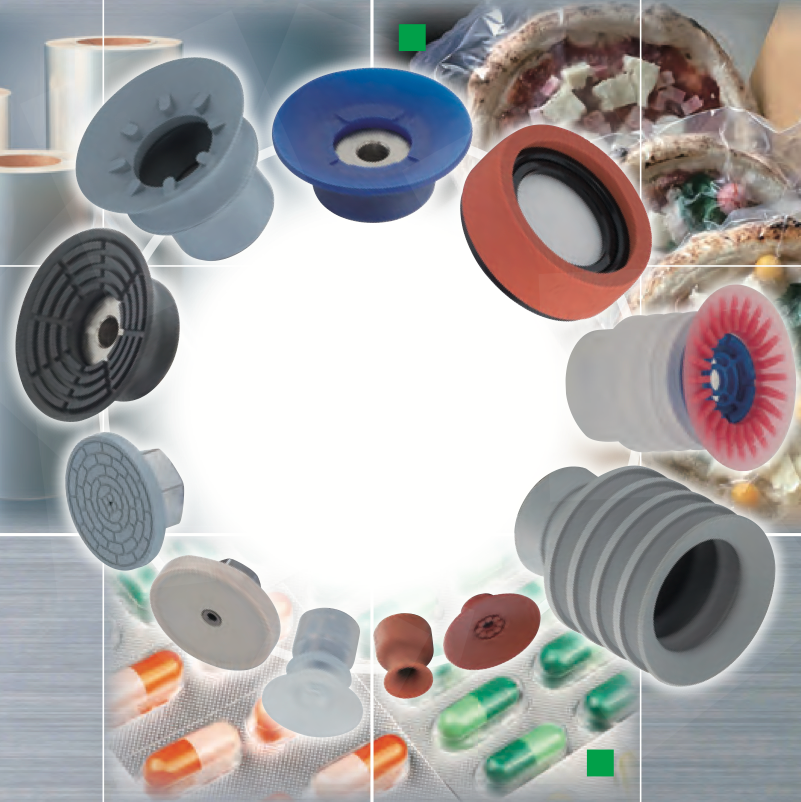
1. Flat Suction Cups – For Smooth Surfaces
Best for: Glass, plastic sheets, metal plates
Strong grip and high stability
Ideal for electronics and precision handling
Used in PCB pick-and-place systems
2. Bellows (Multi-Fold) Suction Cups – Flexible Handling
Best for: Uneven, curved, or delicate surfaces
Compensates height differences
Absorbs shock during high-speed operations
Ideal for packaging lines
3. Deep Suction Cups – For Curved Objects
Best for: Bottles, pipes, containers
Excellent grip on curved surfaces
Common in food & beverage and pharma industries
4. Foam Vacuum Pads – For Porous Materials
Best for: Cardboard, wood, textiles
Covers large surface areas
Effective for irregular and porous materials
Materials Used in Vacuum Suction Cups
Choosing the right material is essential for durability and performance:
NBR (Nitrile Rubber)
Oil-resistant and cost-effective
General industrial use
Silicone (SI)
High temperature resistance
Food-grade and medical applications
Polyurethane (PU)
High wear resistance
Long life in high-cycle automation
FKM (Fluororubber)
Chemical and heat resistant
Ideal for harsh environments
Manufacturers like PISCO offer specialized material options to meet OEM and industry-specific requirements.
Industrial Applications of Vacuum Suction Cups
Automation & Robotics
Robotic vacuum grippers
Pick-and-place systems
Assembly line automation
Electronics & Semiconductor
PCB handling
Chip placement
Wafer transfer
Packaging & Logistics
Carton handling
Palletizing systems
Sorting lines
Automotive Manufacturing
Sheet metal transfer
Component positioning
Food & Pharmaceutical
Hygienic material handling
Contamination-free operations
Benefits of Vacuum Suction Cups for OEMs & Industrial Buyers
1. Increased Productivity
High-speed handling reduces cycle time and improves throughput.
2. Precision & Safety
Minimizes product damage, especially in electronics and glass industries.
3. Flexibility
Handles different shapes, sizes, and materials.
4. Reduced Labor Costs
Automates repetitive tasks efficiently.
5. Low Maintenance
Durable materials ensure longer service intervals.
How to Select the Right Vacuum Suction Cup
Selecting the right suction cup is critical for optimal performance:
✔ Surface Type
Smooth → Flat cups
Uneven → Bellows cups
Porous → Foam pads
✔ Workpiece Weight & Size
Use larger diameter cups or multiple cups for heavy loads.
✔ Environmental Conditions
High heat → Silicone
Chemical exposure → FKM
✔ Cycle Time
High-speed automation requires flexible and durable materials.
✔ Vacuum Source
Ensure compatibility with ejectors or vacuum pumps.
Design Considerations for Automation Engineers
Vacuum Level (kPa) must match application requirements
Safety Factor
Cup Diameter vs Load Capacity
Number of Cups per System
Mounting Flexibility & Stroke Length
Advanced solutions from PISCO support custom integration for OEM machine builders.
Maintenance & Troubleshooting Guide
Common Issues
Air leakage → Check sealing surface
Cup wear → Replace elastomer
Poor grip → Verify vacuum pressure
Best Practices
Regular inspection
Clean suction surfaces
Maintain vacuum lines
Use filters to prevent contamination