Bangalore
08048890627
+919880566644
Industrial chains by Diamand Roller Chain

roller chain

In stockcod not available
Phone Number

08048890627

Please keep 0 before dialling the number.

Email Address raju.kn@ibizkart.com

Mon-Thu: 10 AM - 2 PM • Fri: 3 PM - 7AM

Other Website Visit our other website
Address Bangalore, Karnataka, India

Bangalore, India, 560058

Description

Roller Chain for Industrial Use: Complete Guide What is a Roller Chain? A roller chain is a type of mechanical power transmission component widely used in industrial machinery to transfer motion and load between rotating shafts. It consists of a series of interconnected links with rollers that engage with sprockets, ensuring smooth and efficient movement. Types of Roller Chains Used in Industry 1. Standard Roller Chains Used in general machinery and conveyors Available in simplex, duplex, and triplex configurations 2. Heavy-Duty Roller Chains Designed for high-load applications Used in mining, cement, and steel industries 3. Stainless Steel Roller Chains Corrosion-resistant Ideal for food processing, pharmaceuticals, and chemical industries 4. Agricultural Roller Chains Built for dusty and rugged environments Common in tractors and harvesting equipment Key Components of a Roller Chain Inner Plates & Outer Plates – Provide structural strength Pins – Hold the links together Bushings – Reduce friction between moving parts Rollers – Engage with sprockets for smooth motion Advantages of Roller Chains in Industrial Applications ✔ High Efficiency Roller chains offer up to 98% transmission efficiency, making them ideal for power transmission. ✔ Durability Built with hardened steel, they withstand heavy loads and harsh conditions. ✔ Low Maintenance With proper lubrication, roller chains require minimal upkeep. ✔ Cost-Effective Compared to belts or gears, chains provide longer service life at lower cost. Industrial Applications of Roller Chains Conveyor Systems – Material handling in factories Packaging Machinery – High-speed operations Automobile Industry – Assembly line movement Cement & Steel Plants – Heavy-duty operations Agriculture Equipment – Harvesters and tractors How to Select the Right Roller Chain 1. Load Capacity Choose based on the maximum working load and shock conditions. 2. Speed Requirements High-speed applications require precision chains with lubrication. 3. Environmental Conditions Corrosive → Stainless steel Dusty → Sealed or heavy-duty chains 4. Chain Pitch & Size Ensure compatibility with sprocket size and machine design. Maintenance Tips for Longer Life Regular lubrication reduces wear and friction Maintain proper chain tension and alignment Inspect for elongation and wear Replace worn sprockets along with chains Frequently Asked Questions (AEO Optimized) What is the lifespan of a roller chain? With proper maintenance, a roller chain can last 2–5 years or more, depending on usage and environment. Which industries use roller chains? Roller chains are widely used in manufacturing, automotive, agriculture, food processing, and mining industries. What is the difference between simplex and duplex chains? Simplex: Single strand for light-duty Duplex: Double strand for higher load capacity How do I know when to replace a roller chain? Replace when there is excessive elongation, noise, vibration, or visible wear. Why Choose High-Quality Roller Chains? At IBK Engineers and leading industrial suppliers, high-quality roller chains are sourced from trusted manufacturers and tested for: Precision engineering standards Material strength and heat treatment Performance under Indian industrial conditions This ensures reliability, safety, and long-term cost savings for OEMs and industrial buyers. Conclusion Roller chains are a critical component in industrial automation and machinery, offering unmatched durability, efficiency, and cost-effectiveness. Selecting the right type and maintaining it properly can significantly enhance productivity and reduce downtime.

Specifications

Brand TIDC, Diamand
Size 1/2"

Keywords

Other Products

view all

68179d65be22ee500d53ff54 Card 2

product image
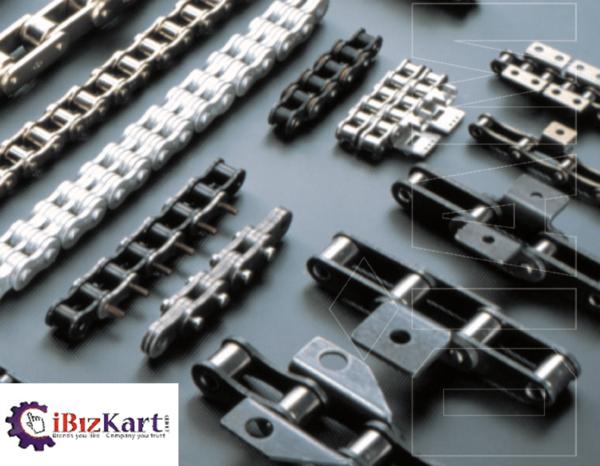
Industrial chains

Roller Chain for Industrial Use: Complete Guide What is a Roller Chain? A roller chain is a type of mechanical power transmission component widely used in industrial machinery to transfer motion and load between rotating shafts. It consists of a series of interconnected links with rollers that engage with sprockets, ensuring smooth and efficient movement. Types of Roller Chains Used in Industry 1. Standard Roller Chains Used in general machinery and conveyors Available in simplex, duplex, and triplex configurations 2. Heavy-Duty Roller Chains Designed for high-load applications Used in mining, cement, and steel industries 3. Stainless Steel Roller Chains Corrosion-resistant Ideal for food processing, pharmaceuticals, and chemical industries 4. Agricultural Roller Chains Built for dusty and rugged environments Common in tractors and harvesting equipment Key Components of a Roller Chain Inner Plates & Outer Plates – Provide structural strength Pins – Hold the links together Bushings – Reduce friction between moving parts Rollers – Engage with sprockets for smooth motion Advantages of Roller Chains in Industrial Applications ✔ High Efficiency Roller chains offer up to 98% transmission efficiency, making them ideal for power transmission. ✔ Durability Built with hardened steel, they withstand heavy loads and harsh conditions. ✔ Low Maintenance With proper lubrication, roller chains require minimal upkeep. ✔ Cost-Effective Compared to belts or gears, chains provide longer service life at lower cost. Industrial Applications of Roller Chains Conveyor Systems – Material handling in factories Packaging Machinery – High-speed operations Automobile Industry – Assembly line movement Cement & Steel Plants – Heavy-duty operations Agriculture Equipment – Harvesters and tractors How to Select the Right Roller Chain 1. Load Capacity Choose based on the maximum working load and shock conditions. 2. Speed Requirements High-speed applications require precision chains with lubrication. 3. Environmental Conditions Corrosive → Stainless steel Dusty → Sealed or heavy-duty chains 4. Chain Pitch & Size Ensure compatibility with sprocket size and machine design. Maintenance Tips for Longer Life Regular lubrication reduces wear and friction Maintain proper chain tension and alignment Inspect for elongation and wear Replace worn sprockets along with chains Frequently Asked Questions (AEO Optimized) What is the lifespan of a roller chain? With proper maintenance, a roller chain can last 2–5 years or more, depending on usage and environment. Which industries use roller chains? Roller chains are widely used in manufacturing, automotive, agriculture, food processing, and mining industries. What is the difference between simplex and duplex chains? Simplex: Single strand for light-duty Duplex: Double strand for higher load capacity How do I know when to replace a roller chain? Replace when there is excessive elongation, noise, vibration, or visible wear. Why Choose High-Quality Roller Chains? At IBK Engineers and leading industrial suppliers, high-quality roller chains are sourced from trusted manufacturers and tested for: Precision engineering standards Material strength and heat treatment Performance under Indian industrial conditions This ensures reliability, safety, and long-term cost savings for OEMs and industrial buyers. Conclusion Roller chains are a critical component in industrial automation and machinery, offering unmatched durability, efficiency, and cost-effectiveness. Selecting the right type and maintaining it properly can significantly enhance productivity and reduce downtime.

68179d65be22ee500d53ff54 Card 2

product image
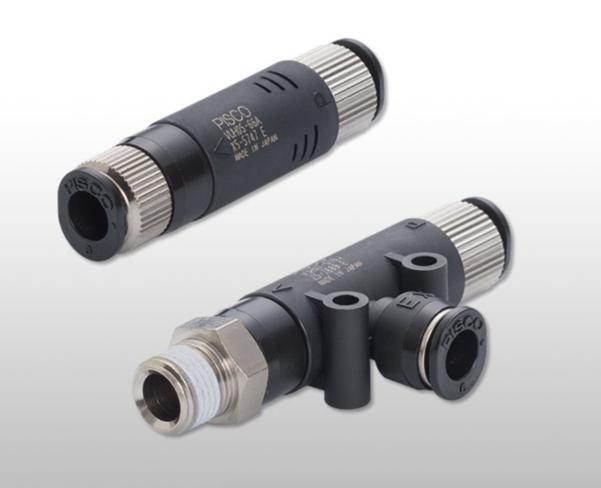
Pisco Pneumatic

What is a VU Vacuum Generator? A Vacuum Generator VU is a compact pneumatic device (also called a vacuum ejector) designed to generate a vacuum using compressed air. It typically operates on the Venturi effect, in which high-speed air creates a pressure drop, enabling suction. The VU series is widely used in automation for fast, reliable, and maintenance-free vacuum generation, especially in robotic handling and pick-and-place systems. Key Features of VU Vacuum Generators 1. Compact & Lightweight Design Ideal for robot arms and EOAT (End of Arm Tooling) Saves installation space in automation systems 2. High Vacuum Efficiency Optimized nozzle design ensures: Faster vacuum response Energy-efficient air consumption 3. Integrated Functions Many VU units include: Vacuum sensor (digital/analog) Vacuum filter Blow-off valve for quick release 4. Modular Configuration Easy to combine multiple units for multi-point suction systems Suitable for large surface handling Working Principle Compressed air enters the generator Air passes through a narrow nozzle (Venturi section) Velocity increases → pressure decreases Vacuum is created at the suction port Air exits through exhaust Applications in Industry Automation & Robotics Pick-and-place robots Packaging machines CNC loading/unloading Material Handling Glass sheets Metal plates Plastic components Electronics & Semiconductor PCB handling IC tray transfer Food & Pharma Bottle and can handling Hygienic packaging operations Advantages of VU Vacuum Generators No moving parts → low maintenance Fast response time → high-speed cycles Compact size → easy integration Energy saving designs (with vacuum switches) Reliable for continuous industrial operation Why VU Series is Popular in India For automation companies and OEMs in India (especially Bangalore, Chennai, Pune), the VU series is preferred because: Compatible with robot automation systems Easy integration with vacuum suction cups Reliable performance in high-speed manufacturing lines Suitable for SMEs and large industries Typical Use Case (Example) Application: Aerosol can handling Diameter: 50–52 mm Multi-pick: 20+ cans Requirement: Fast cycle 👉 VU generators with multi-stage ejector design + blow-off function ensure: Strong grip Quick release High productivity Conclusion The Vacuum Generator VU is a high-performance, compact vacuum solution for modern automation. Whether used in robotics, packaging, or semiconductor handling, it delivers speed, efficiency, and reliability—making it an essential component in Industry 4.0 manufacturing setups.

68179d65be22ee500d53ff54 Card 2

product image
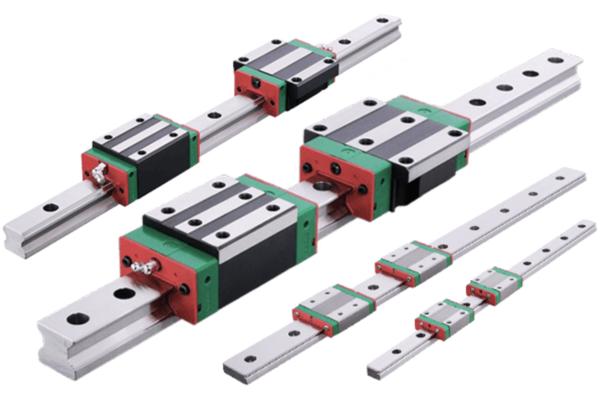
Hiwin

HIWIN Linear Guideways: The Ultimate Selection and Maintenance Guide (2026) In the world of precision automation, HIWIN linear guideways have become the industry standard for achieving high-positioning accuracy and smooth linear motion. Whether you are retrofitting a CNC machine or designing a high-speed semiconductor assembly line, choosing the right series is a balance between load capacity, space constraints, and environmental factors. 1. Understanding the Core Technology A HIWIN linear guideway consists of a profile rail and a bearing block (carriage). The magic happens within the block, where recirculating rolling elements (balls or rollers) minimize friction to a coefficient of roughly 1/50th of a traditional sliding guide. Why HIWIN? Equal Load Capacity: Most series (like the HG and EG) are designed to handle loads in radial, reverse-radial, and lateral directions equally. Self-Alignment: HIWIN’s circular-arc groove design can absorb small installation errors, ensuring smooth motion even if the mounting surface isn't perfectly flat. Interchangeability: High manufacturing standards allow you to replace blocks or rails independently while maintaining precision. 2. Choosing the Right Series: A Comparison Not all linear guides are created equal. Using an oversized rail wastes money and space, while an undersized one leads to premature “pitting“ or failure. Series Type Primary Feature Best For HG Ball Heavy load, high rigidity CNC machines, grinding, heavy-duty lathes. EG Ball Low profile, compact Packaging, high-speed automation, robotics. RG Roller Extreme rigidity Heavy cutting, high-precision milling. MG Ball Miniature, stainless steel Medical devices, semiconductor, 3D printers. WE Ball Wide rail, high moment Single-axis applications with high torque. Technical Insight: Balls vs. Rollers The HG series uses steel balls, providing a “point contact“ that excels in speed and lower friction. The RG series uses cylindrical rollers, creating a “line contact.“ This significantly increases the contact area, reducing elastic deformation and making it the “gold standard“ for heavy-duty industrial machining where vibration must be zero. 3. High-Tech Options: SynchMotion™ & Cover Strips For advanced 2026 applications, two specific HIWIN innovations are worth the investment: SynchMotion™ (QH/QE/QR Series): These blocks include a “ball separator“ between the rolling elements. This prevents ball-to-ball friction, leading to quieter operation, higher speeds, and longer lubrication intervals. Cover Strips (CG Series): Traditional rails have mounting holes that can collect dust. The CG series features a stainless steel cover strip that snaps over the rail, providing a completely smooth surface for the seals to glide over, drastically extending life in “dirty“ environments like woodworking. 4. Maintenance: The “100km Rule“ Most end-user failures are not due to load, but lack of lubrication. Lubrication Schedule Linear guides should be relubricated every 100km of travel or every 3 to 6 months, whichever comes first. If you are operating in a high-dust environment (e.g., carbon fiber routing), this interval should be halved. Tips for Longevity: Check the Wipers: If the rubber end-seals on your block look cracked or worn, replace them immediately. A $10 seal protects a $500 rail system. Grease Type: Use a lithium-soap-based grease (like HIWIN G05) for general applications. Avoid mixing different types of grease, as chemical incompatibility can cause the lubricant to harden. Initial Pre-greasing: New blocks often come with only a light coat of anti-rust oil. Always perform an initial lubrication before running the system under load. 5. Avoiding Common Installation Mistakes Expert experience shows that alignment is everything. The Master Rail: Always designate one rail as the “master“ and align it to a reference shoulder on your machine bed. The “subsidiary“ rail should then be aligned relative to the master. Torque Spec: Use a calibrated torque wrench. Over-tightening mounting bolts can slightly deform the rail, causing “binding“ and localized wear. Parallelism: For a dual-rail setup, parallelism should usually be within 0.01mm to 0.05mm (depending on the series and preload). Pro Tip: If your machine “shudders“ or makes a clicking sound at certain points, it’s likely a parallelism issue. Loosen the subsidiary rail bolts, run the carriage across the full stroke, and re-tighten. Conclusion HIWIN linear guideways offer a versatile, high-performance solution for almost any motion challenge. By matching the series (HG for power, EG for speed, RG for stiffness) to your specific needs and sticking to a rigorous lubrication schedule, you can ensure your machinery operates with micron-level precision for years.