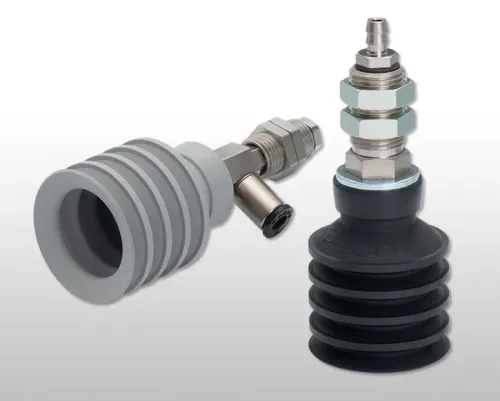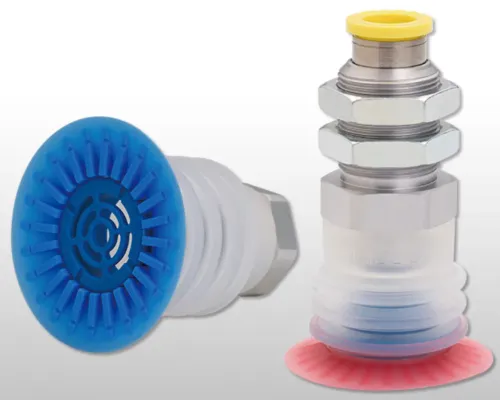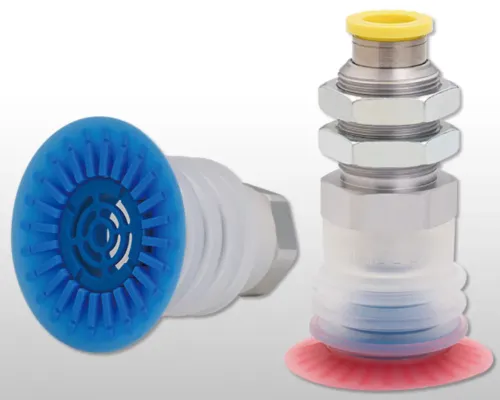
In industrial automation, vacuum suction cups are widely used for lifting, gripping, packaging, palletizing, robotic pick-and-place, glass handling, sheet metal transfer, carton handling, electronics assembly, food processing, and machine automation. When multiple vacuum suction cups share a single vacuum generator, maintaining stable vacuum pressure becomes critical for safe and reliable operation.
One of the most common reasons for dropped workpieces is vacuum leakage caused by one or more suction cups failing to seal correctly. This may happen when a cup misses the product, lands on a hole, encounters an uneven surface, or handles workpieces of different sizes. In these situations, atmospheric air enters the open suction cup, rapidly reducing the vacuum level throughout the entire system.
Why Vacuum Falls in Multiple Suction Cup Systems
In a centralized vacuum system, several vacuum cups are connected to one common vacuum manifold or vacuum ejector. If even one cup does not make proper contact, the incoming air can significantly reduce the vacuum available to every connected suction cup. As a result, workpieces that were previously held securely may suddenly lose grip and fall, leading to:
Product damage
Machine downtime
Operator safety risks
Increased production losses
Higher maintenance costs
Reduced automation efficiency
This issue becomes especially important in robotic automation, CNC loading, packaging machines, material handling systems, woodworking, automotive manufacturing, electronics production, and food processing equipment.
How a Vacuum Fall Prevention Valve Works
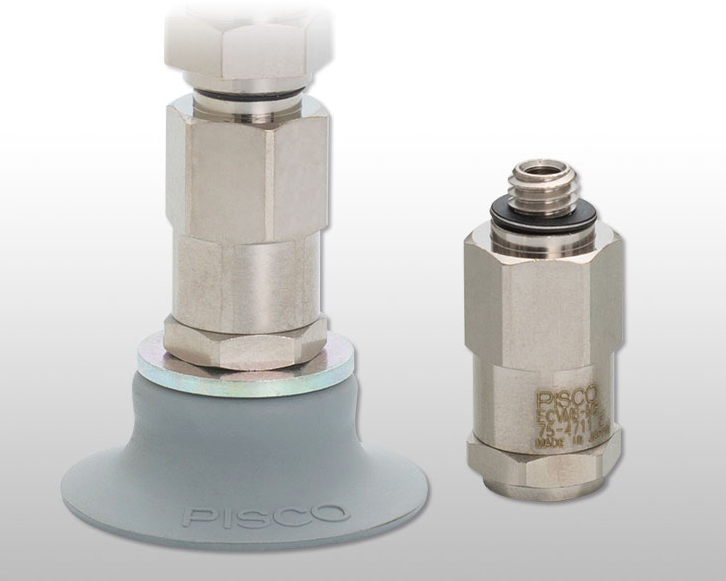
A Pisco Fall Prevention Valve, also known as a Vacuum Saving Valve or Vacuum Check Valve, is installed between each individual vacuum suction cup and the main vacuum manifold.
Inside the valve is a precision ball mechanism. When a suction cup successfully grips the workpiece, air flows normally. If one suction cup fails to seal, the internal ball immediately blocks the airflow, preventing excessive air leakage into the vacuum system.
Instead of losing vacuum across the entire circuit, only the unused cup is isolated while the remaining cups continue holding the workpiece securely.
This simple yet highly effective design protects the overall vacuum level and greatly improves system reliability.
Benefits of Using Fall Prevention Valves
Installing individual vacuum saving valves offers several advantages:
Prevents workpieces from falling during operation
Reduces vacuum loss in centralized vacuum systems
Maintains stable gripping force on sealed suction cups
Improves operator and workplace safety
Increases machine productivity and uptime
Reduces compressed air consumption
Extends vacuum generator efficiency
Protects valuable products from accidental drops
Ideal for applications using multiple vacuum suction cups
Improves reliability during high-speed robotic handling
Best Practices for Multi-Cup Vacuum Tooling
For maximum safety and performance:
Install one vacuum saving valve for every suction cup.
Use zoned vacuum circuits when handling different product sizes.
Regularly inspect suction cups for wear, cracks, contamination, or hardening.
Replace damaged vacuum pads before leakage affects production.
Check vacuum hoses and fittings for air leaks.
Verify vacuum pressure using a vacuum gauge or sensor.
Clean filters and vacuum generators according to maintenance schedules.
Apply rust-prevention oil to metallic components if equipment remains unused for extended periods.
Turn off the vacuum control system during long shutdown periods to protect pneumatic components.
Applications
Vacuum fall prevention valves are widely used in:
Robotic pick-and-place automation
Packaging machinery
Carton handling systems
Glass handling equipment
Sheet metal automation
CNC loading and unloading
Electronics manufacturing
Food packaging
Pharmaceutical production
Automotive assembly
Woodworking machinery
Plastic injection molding automation
Warehouse automation
Material handling systems
Improve Safety and Productivity
Whether your automation system uses two suction cups or hundreds, protecting the vacuum circuit is essential. A properly selected Pisco Fall Prevention Valve minimizes vacuum leakage, preserves gripping force, prevents dropped workpieces, and improves production reliability.
For Indian manufacturers, OEMs, automation integrators, and machine builders, using high-quality vacuum suction cups, vacuum generators, vacuum check valves, and vacuum saving valves is an effective way to enhance safety, reduce downtime, improve energy efficiency, and increase long-term operational performance in modern industrial automation systems. You can call IBK Engineers for tecnical supports.