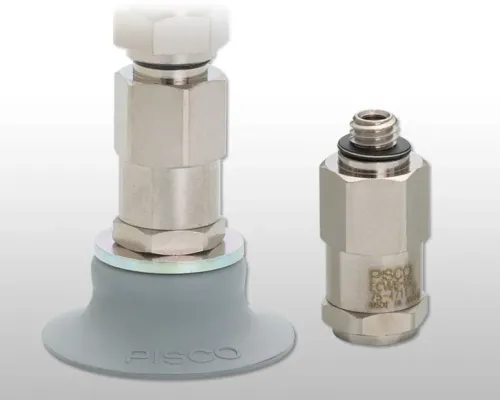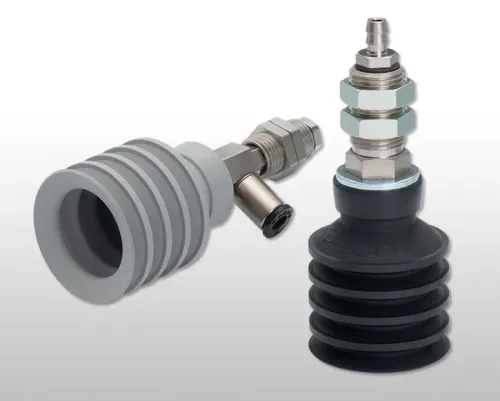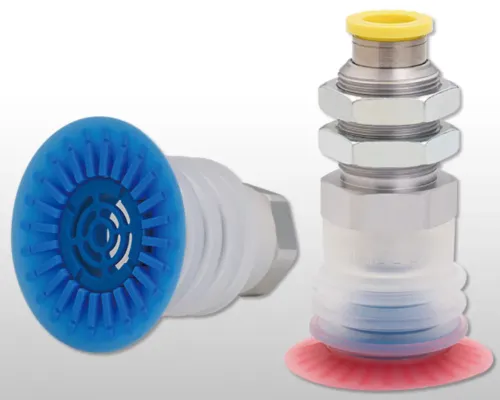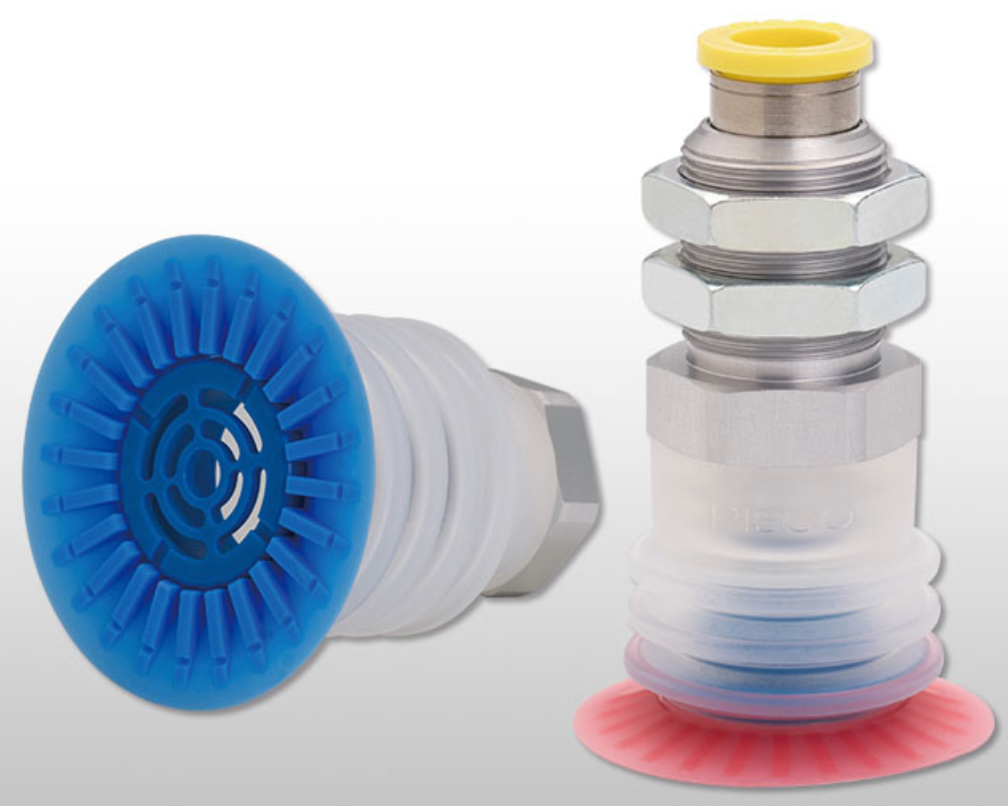
**Vacuum suction cups**, also called **vacuum pads**,
are among the most important components in industrial automation, robotics, packaging, CNC machines, pick-and-place systems, sheet metal handling, glass processing, electronics assembly, food processing, pharmaceutical manufacturing, and material handling. Acting as the connection between the **vacuum generator** and the workpiece, they determine the reliability, speed, and safety of every vacuum handling system.
When a vacuum cup loses suction, production slows, product quality suffers, and machine downtime increases. Understanding the causes of vacuum failure helps maintenance engineers and designers improve system reliability while reducing operating costs.
## Why Do Vacuum Suction Cups Lose Suction?
Several factors can reduce vacuum holding force:
* Worn or damaged suction cup lips
* Poor sealing between the cup and workpiece
* Air leakage in pneumatic tubing or fittings
* Incorrect vacuum pressure or insufficient vacuum flow
* Dirty, oily, dusty, or uneven workpiece surfaces
* Incorrect suction cup material selection
* Wrong cup size for the load
* High acceleration exceeding holding force
* Cracked vacuum hoses or loose pneumatic connections
Even a small air leak can significantly reduce gripping performance and increase cycle failures.
## Troubleshooting Common Vacuum Leakage Problems
A systematic inspection can quickly identify the source of the problem.
**Step 1 – Inspect the Suction Cup**
Regularly inspect vacuum suction cups for:
* Cracks
* Cuts
* Hardened rubber
* Deformation
* Excessive wear
* Contamination
If the suction cup is worn out, replace it immediately to maintain safe lifting performance.
**Step 2 – Check Vacuum Pressure**
Measure the actual vacuum level using a pressure gauge. Insufficient vacuum usually indicates:
* Vacuum generator malfunction
* Air leakage
* Blocked filter
* Improper regulator setting
* Incorrect compressor pressure
Monitoring vacuum pressure helps predict maintenance before unexpected downtime occurs.
**Step 3 – Inspect Pneumatic Connections**
Check:
* Push-in fittings
* Tubing
* Connectors
* Vacuum manifolds
* Vacuum generators
* Vacuum filters
Replace damaged tubing or leaking fittings to restore vacuum efficiency.
## Selecting the Correct Vacuum Suction Cup
Proper selection greatly improves productivity and service life. Engineers should evaluate:
* Workpiece material
* Surface roughness
* Surface temperature
* Product weight
* Shape and curvature
* Cycle time
* Required lifting speed
* Horizontal or vertical handling
* Environmental conditions
A structured selection checklist helps identify the ideal cup diameter, material, shape, and vacuum capacity for each application.
Common materials include:
* Oil-resistant rubber
* Natural rubber
* Natural yellow rubber
* Silicone
* Special-purpose elastomers for high-temperature or food-grade applications
Different materials provide different levels of flexibility, wear resistance, temperature capability, and chemical resistance.
## Vacuum Gauges Improve System Reliability
Accurate vacuum monitoring is essential for predictive maintenance.
The **PISCO Battery-operated Pressure Gauge GPD** features a compact, lightweight design using durable resin components. It measures gauge pressure, operates in ambient temperatures from **0°C to 60°C (non-freezing)**, and features an easy-to-read **150° scale angle** for improved visibility. Its compact size makes it suitable for machine builders, automation panels, maintenance teams, and production equipment where installation space is limited.
Continuous pressure monitoring helps engineers detect leakage, unstable vacuum conditions, and declining system performance before failures occur.
## Applications
Vacuum suction cups are widely used in:
* Industrial automation
* Robotic pick-and-place systems
* Packaging machinery
* CNC loading
* Glass handling
* Sheet metal transfer
* Plastic molding
* Electronics assembly
* Food processing
* Pharmaceutical production
* Automotive manufacturing
* Logistics and warehouse automation
## Why Choose IBK Engineers?
IBK Engineers supplies high-quality **PISCO vacuum suction cups, vacuum generators, vacuum gauges, pneumatic fittings, tubing, and automation components** for industries across India. Our engineering team assists customers in selecting the correct vacuum cup based on application requirements, reducing machine downtime while improving productivity and safety.
Whether you require replacement vacuum pads, leakage troubleshooting, vacuum system design support, or complete automation solutions, IBK Engineers provides practical technical guidance and dependable industrial products.
Contact IBK Engineers today for expert assistance in selecting the right vacuum suction cups, vacuum generators, vacuum gauges, and PISCO pneumatic components to maximize the performance and reliability of your vacuum handling systems.