Thank you for writing to us. One of our executive will reach back to you through your submitted medium. In case there’s an urgency, feel free to connect over WhatsApp for faster response.
Prefer calling? Dial +9108048128418 (International callers) or 08048128418 (Indian callers).
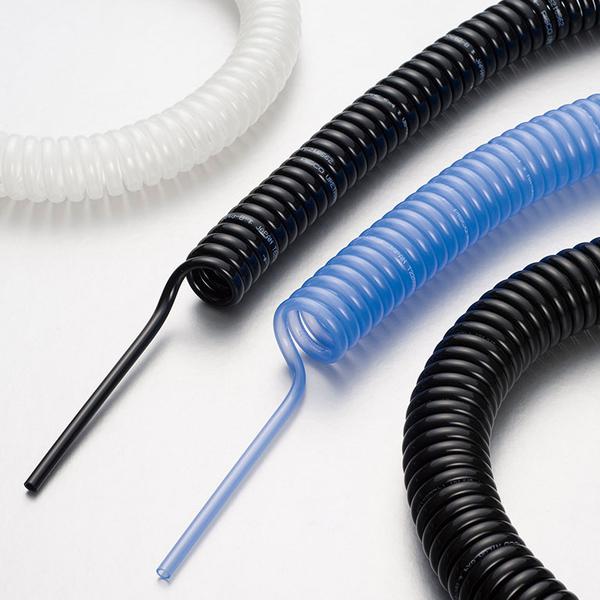
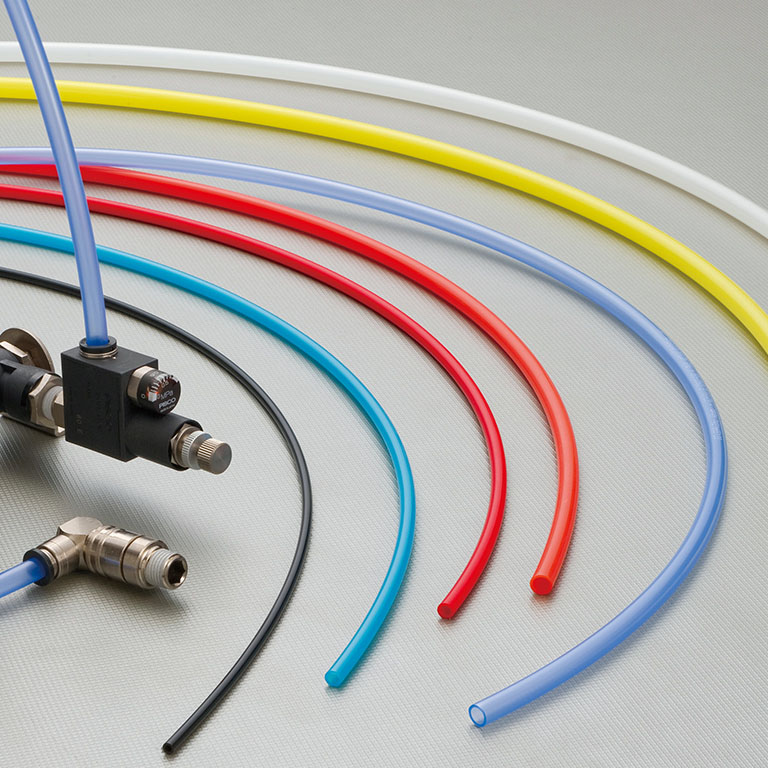
Upgrade your automation and fluid-handling systems with Pisco Polyurethane Tubes, engineered for high performance in air piping and water flow applications. Made from premium, food-grade polyurethane, these tubes deliver excellent flexibility, long life, and easy routing—perfect for compact piping layouts in factories, machines, and OEM assemblies. The smooth inner surface ensures stable flow, reduces pressure loss, and maintains hygiene standards required in food, beverage, packaging, and general industrial equipment.
To support any application design, Pisco PU tubes are available in 10 vibrant colours for line identification and 14 size options in both inch and metric (mm) sizes, giving maximum compatibility with global fittings and machines. Whether you're setting up pneumatic circuits, water cooling lines, or precision automation equipment, Pisco’s Polyurethane Tube offers reliable performance, flexibility, and long-term durability—making it the trusted choice for engineers and maintenance teams.
PU Tubes: High-Performance Pneumatic Solutions for Indian Industries
Polyurethane (PU) tubes are a cornerstone in modern pneumatic systems, offering unmatched flexibility, durability, and chemical resistance. Used extensively in automation, assembly lines, robotics, and industrial machinery, PU tubes deliver reliability and precision, which are critical for high-efficiency production environments.
For Indian engineers and industrial users, understanding material properties, design features, and applications is key to selecting the right PU tubing for your pneumatic systems.
1. Why Polyurethane Tubes?
Polyurethane tubes stand out for their combination of flexibility, abrasion resistance, and chemical stability. Unlike PVC or rubber tubes, PU tubes can handle frequent bending, vibration, and high-pressure pneumatic flows without deformation.
Key Advantages:
High flexibility for tight bends and compact layouts.
Exceptional wear resistance for long-term operation.
Low friction coefficient for smooth pneumatic flow.
Good chemical and oil resistance for industrial environments.
Lightweight and easy to install in automation setups.
These properties make PU tubes ideal for sectors such as automotive manufacturing, packaging, electronics assembly, and food processing.
2. PU Tube Material Properties
Different PU tube formulations allow engineers to match tube characteristics to specific industrial requirements:
Standard PU Tubes
Properties: Flexible, lightweight, and suitable for general pneumatic applications.
Temperature Range: -20°C to +60°C.
Applications: Pneumatic conveyors, pick-and-place machinery, and air distribution systems.
Food-Grade PU Tubes
Properties: Non-toxic, FDA-compliant, and resistant to oils and grease.
Temperature Range: -20°C to +80°C.
Applications: Food and beverage processing, pharmaceutical packaging, and medical automation.
High-Performance PU Tubes
Properties: Extra abrasion resistance, higher pressure tolerance, and UV resistance.
Temperature Range: -30°C to +90°C.
Applications: Heavy-duty industrial machines, robotics, and automotive pneumatic lines.
3. Design Features and Options
PU tubes are available in various sizes, colors, and wall thicknesses, giving engineers flexibility in system design:
Internal Diameter (ID) & Outer Diameter (OD): Matches fittings and ensures optimal air flow.
Color Coding: Facilitates system organization and easy maintenance.
Reinforced PU Tubes: Added strength for high-pressure pneumatic systems.
Pre-Cleaned or Clean-Room PU Tubes: Suitable for semiconductor, pharmaceutical, and medical device manufacturing.
4. Key Applications of PU Tubes in India
PU tubing is widely adopted across Indian industries for efficiency, reliability, and safety:
Automation and Robotics: Smooth pneumatic flow for actuators, cylinders, and grippers.
Packaging Industry: Food-grade tubes for filling, sealing, and conveying applications.
Automotive Manufacturing: Durable PU tubes for assembly line automation and air-powered tools.
Pharmaceuticals & Medical Devices: Cleanroom-ready tubes for contamination-free pneumatic transport.
5. Integrating PU Tubes into Pneumatic Systems
A PU tube is only as effective as the system it serves. A complete pneumatic setup includes:
Fittings & Connectors: Push-in fittings for fast, leak-proof connections.
Vacuum Generators & Pumps: Ensure steady air or vacuum flow.
Filters & Regulators: Maintain clean, pressurized airflow for optimal performance.
Manifolds & Tubing Networks: Organize distribution for multiple actuators or cylinders.
By selecting the right tube size, material, and accessories, engineers can maximize system efficiency, reduce maintenance, and extend equipment life.
6. Conclusion
PU tubes are a versatile, durable, and reliable solution for pneumatic systems in Indian industries. By understanding the material properties, design options, and proper system integration, engineers can achieve high efficiency, longevity, and safety in their automation and pneumatic applications.
Investing in quality PU tubes ensures smooth operations, reduces downtime, and delivers cost-effective performance for years.
Gemini said
High-Performance Vacuum Suction Cups: The Heart of Robotic Automation
In the world of high-speed packaging, the smallest component often carries the heaviest load. Vacuum suction cups are the critical interface between a robotic arm and the product, determining the speed, safety, and reliability of an entire production line.
Precision Engineering for Packaging
Whether you are handling porous cardboard, flexible pouches, or delicate glass, selecting the right material is paramount.
Silicone: Ideal for extreme temperatures and food-grade applications.
Nitrile (NBR): The workhorse for oily environments or heavy-duty wear.
Polyurethane: Offers maximum tear resistance for high-friction movements.
Optimizing Robotic Efficiency
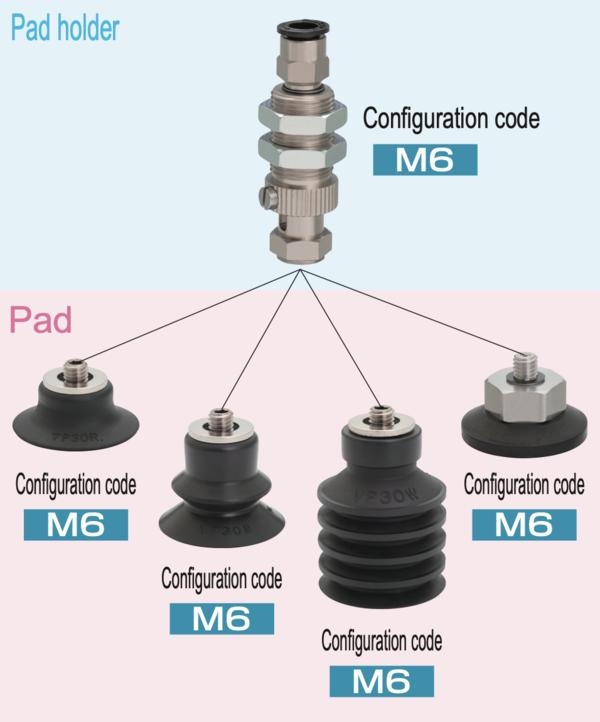
Modern vacuum suction cups for robots are designed to minimize “cycle time.“ Using bellows-style cups provides a “lifting“ effect that compensates for height differences and uneven surfaces, while flat cups offer the stability needed for high-acceleration “pick and place“ tasks.
+1
Why EEAT Matters in Vacuum Technology
When sourcing industrial components, Experience and Expertise are non-negotiable. Using sub-standard cups leads to “drop incidents,“ increasing downtime and cost. Leading manufacturers now integrate sensing technology directly into the vacuum manifold to provide real-time feedback on seal integrity.
Superior Chemical & Weather Resistance: Why Fluororesin Tubes Are Ideal for Critical Industries
Fluororesin tubes are widely recognized for their exceptional chemical and weather resistance, making them the preferred choice for demanding applications in chemical processing, food manufacturing, medical care, and semiconductor industries. Engineered from high-performance fluoropolymers such as PTFE and PFA, these tubes offer unmatched durability in aggressive environments.
One of the key advantages of fluororesin tubing is its resistance to corrosive chemicals, acids, and solvents. This ensures long service life and reduces maintenance costs in chemical plants and laboratories. In food-processing applications, fluororesin tubes provide non-reactive and non-toxic properties, maintaining hygiene and preventing contamination—critical for compliance with global safety standards.
In the medical field, fluororesin tubing is valued for its biocompatibility and sterilization capability, supporting safe fluid transfer and pharmaceutical production. Similarly, in semiconductor manufacturing, where ultra-clean environments are essential, these tubes offer high purity, low particle generation, and excellent thermal stability.
Additionally, fluororesin tubes withstand extreme temperatures and harsh outdoor conditions, ensuring consistent performance in both high-heat and UV-exposed environments.
With proven reliability, superior material properties, and versatility, fluororesin tubes are a trusted solution for engineers and industrial buyers seeking high-performance fluid handling systems.
Stainless Steel 316 Fittings: Complete Industrial Guide for Purchase, Design, and Maintenance
In modern industrial engineering, selecting the right piping components is essential for safety, efficiency, and long-term reliability. Among the most widely used materials in industrial piping systems are Stainless Steel 316 fittings, known for their excellent corrosion resistance, durability, and hygienic properties. These fittings play a critical role in industries such as chemical processing, pharmaceuticals, food manufacturing, oil & gas, and water treatment.
For industrial buyers, plant designers, and maintenance engineers, understanding the properties, applications, design considerations, and maintenance requirements of Stainless Steel 316 fittings is crucial for building reliable piping systems.
This detailed guide explains everything about SS 316 fittings—from material properties and types to procurement strategies and maintenance practices—while following SEO and EEAT (Experience, Expertise, Authoritativeness, Trustworthiness) principles.
What Are Stainless Steel 316 Fittings?
Stainless Steel 316 fittings are piping components manufactured from grade 316 stainless steel, an austenitic alloy containing chromium, nickel, and molybdenum. These elements improve corrosion resistance, especially in chloride or saline environments.
The addition of 2–3% molybdenum significantly enhances resistance to pitting and crevice corrosion compared with standard stainless steel grades like 304.
These fittings are widely used in process piping to connect pipes, change direction, control flow, or connect different equipment within an industrial system.
Typical fittings include:
Elbows (45°, 90°, 180°)
Tees
Reducers
Couplings
Caps
Nipples
Stub ends
Cross fittings
Instrumentation tube fittings
These components are manufactured according to international standards
Cleanroom-Ready Pneumatics Components from Pisco: A Guide for Engineers and Maintenance Teams
In advanced automation systems—particularly in semiconductor, pharmaceutical, biotech, electronics, and precision assembly sectors—pneumatic components must meet stringent cleanliness, reliability, and performance standards. Pisco, a globally recognized Japanese manufacturer, offers cleanroom-ready pneumatic components engineered to support these demanding environments with excellent integration into robotic systems and automated production lines.
Cleanroom-ready variants of Pisco components, including fittings, tubing, and connectors, are manufactured, pre-cleaned, and packaged under controlled conditions to minimize particulate generation and contamination. These components are ideal for ISO-classified cleanrooms or environments where even minute contamination can disrupt processes or damage products.
Critical elements include ultra-clean polyurethane and nylon tubes designed for minimal abrasion and outgassing—an important factor for equipment exposed to high-precision robotic handling or vacuum systems. This controlled purity ensures smooth airflow, reduced downtime from contamination, and easier lifecycle maintenance for engineers.
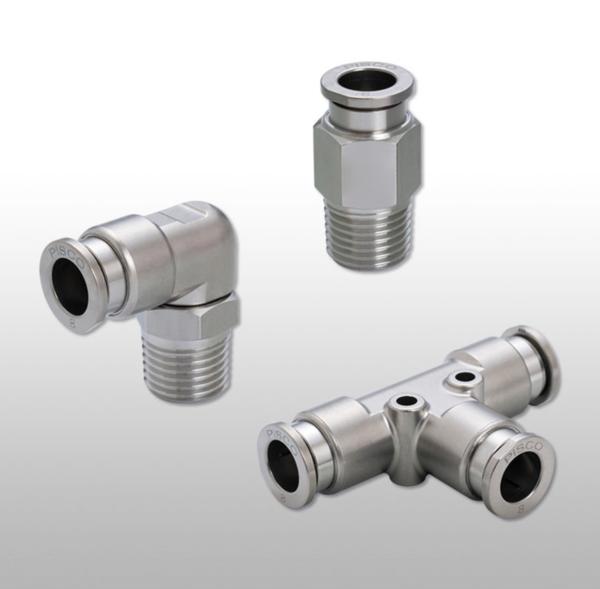
For fluid and air distribution, high-quality cleanroom-package fittings such as Pisco PC4‑02 Pneumatic Straight Fitting and PISCO Pneumatic Elbow Connector PL4‑M5 offer compact, leak-resistant connections that simplify machine layout and reduce service time. Advanced flow control valves like Pisco JSC6‑M5A Pneumatic Speed Controller help tune actuator motion precisely—critical for robot end-of-arm tooling and synchronized motion in assembly cells. Additional options such as Pisco Pneumatic Branch Tee and Pisco JSC4‑M5A Pneumatic Speed Controller allow flexible network designs that support modular system upgrades.
For design engineers, these cleanroom-ready components mean predictable performance, easier integration with PLC-based controls, and reduced lifecycle costs. Maintenance teams benefit from quick-connect design features, leak-proof joints, and standardized modules, which significantly cut down replacement times and unscheduled downtime. Together, these characteristics make Pisco’s cleanroom pneumatic portfolio a strong choice for modern robotic and automated systems requiring ultra-clean, reliable pneumatic solutions.
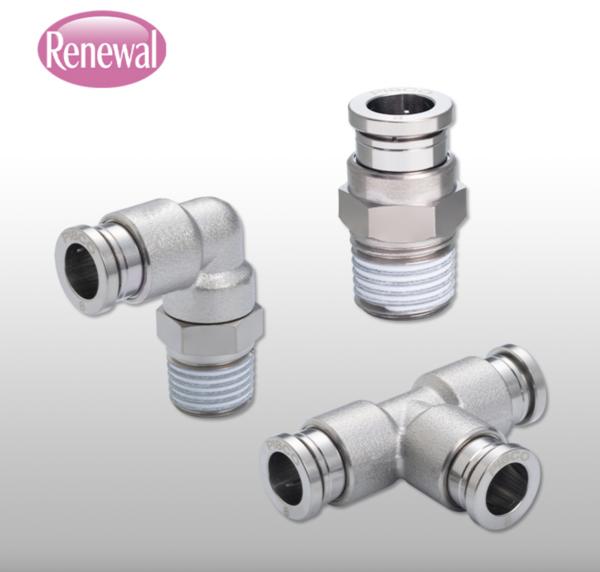
Brass High-Pressure Push-In Fittings Now Available in India
Technical Perspectives on Die Design, Die Maintenance & Injection Molding Benefits
Push-in fittings have long been integral components of pneumatic, fluid handling, and automation systems. With Brass High-Pressure Push-In Fittings now becoming available in India, design engineers and production teams have a powerful new option that combines strength, reliability, and ease of assembly. This article explores the technical aspects of integrating these fittings into plastic part production—specifically in relation to die design, die maintenance, and injection molding processes—along with the core benefits of brass high-pressure push-in fittings.
1. Introduction to Brass High-Pressure Push-In Fittings
Push-in fittings are connectors that allow tubes and hoses to be connected to pneumatic or fluid systems without the need for threaded or clamped joints. Traditional push-in fittings are often made from composite or lower-grade metals. Brass high-pressure variants, by contrast, bring enhanced strength and durability, especially suitable for heavy duty industrial applications requiring elevated operating pressures and frequent connect/disconnect cycles.
2. Relevance to Die Design & Injection Molding
When designing dies and injection molded parts that incorporate fluid or pneumatic connections, engineers must consider multiple factors:
2.1 Compact & Precise Integration
High-pressure brass push-in fittings are compact and standardized, making them easier to integrate into molded parts without redesigning entire manifolds. In applications such as:
Pneumatic manifold blocks
Multi-port fluid panels
Automated actuator interfaces
these fittings help maintain tight dimensional tolerances in molded parts.
2.2 Material Compatibility
During injection molding, design engineers often encounter issues related to material shrinkage, thermal expansion, and molding stresses around insert features. Using brass fittings:
Provides dimensional stability
Reduces the risk of deformation around connection points
Minimizes post-molding rework
2.3 Mold-In Place Inserts
Brass fittings can be incorporated as mold-in place inserts. Die designers can create cavities or housings to press fit, overmold, or encapsulate these fittings with engineering polymers, ensuring:
Leak-proof seals
Structural strength
Precise alignment with external tubing
3. Die Maintenance (Die Matinee) Considerations
Proper die maintenance ensures consistent part quality, reduces downtime, and protects expensive tooling. High-pressure brass push-in fittings can influence maintenance processes in the following ways:
3.1 Reduced Wear on Tooling
Precision-made brass fittings reduce vibration and stress on contacting die surfaces.
Brass does not gall or corrode parts of the mold as aggressively as some metals under high loads.
3.2 Simplified Cleaning
In dies where pneumatic controls or cooling circuits are integrated, brass push-in fittings enable:
Easy disassembly of supply lines for cleaning
Quicker replacement of compromised tubing without removing entire manifolds
3.3 Fewer Die Failures
With robust high-pressure connections:
Leakage inside the die cavity is minimized
Cooling channel performance is stabilized
The die experiences less thermal variation due to stable fluid delivery
4. Injection Molding Process Benefits
In production environments where speed, repeatability, and reliability matter, brass high-pressure push-in fittings contribute the following benefits:
4.1 Higher Operating Pressure Capability
Brass fittings typically handle much higher working pressures compared to plastic or composite alternatives, enabling:
Higher force pneumatic actuators
Denser cooling circuits
Greater process control in hot runner systems
4.2 Enhanced Chemical & Temperature Resistance
Brass resists:
Corrosion from coolant additives
Thermal cycling
This translates to longer lifetime in high-temperature mold environments.
4.3 Ease of Assembly
Push-in design allows operators to:
Connect tubing quickly
Eliminate threaded assembly tools
Reduce assembly time and human error
5. Specific Benefits of Brass High-Pressure Push-In Fittings
Benefit Impact on Manufacturing
Strength & Durability Reduced replacement costs; withstands industrial environments
High Pressure Handling Supports advanced automation and fluid control systems
Corrosion Resistance Longer lifespans, especially in cooling/fluid systems
Ease of Installation Faster setup, reduced labor, lower assembly error
Reusability Lower total cost of ownership (TOC) over multiple cycles
Reliable Sealing Minimizes leaks that can degrade part quality
6. Applications in Indian Manufacturing
With these brass fittings now available locally in India, several sectors stand to benefit:
Automotive & Auto Components
Pneumatic controls, cooling circuits, fuel line prototypes
Industrial Automation
Servo valves, actuators, robotic tooling
Plastic Processing & Packaging
Mold cooling networks,
Festo pneumatic is top brand in India. Festo Supples wide verity of Festo cylinders and Festo valves. We stock Festo tubes and Festo fittings.
Festo supples ISO cylinders can be replace with any brand during maintenance. Festo customer satisfaction and supporting automation through the most advanced pneumatic technologies.
Vacuum Suction Cups Supplier: Complete Guide for Industrial Purchase, Design, and Maintenance
Introduction
In modern manufacturing and automation, vacuum suction cups play a crucial role in material handling, robotics, packaging, and assembly lines. Industrial buyers, design engineers, and maintenance professionals increasingly depend on reliable vacuum suction cups suppliers to ensure productivity, safety, and consistent performance in automated processes.
Vacuum suction cups are essential components used with vacuum generators or pumps to grip, lift, and move objects without mechanical clamps. They are widely applied in industries such as electronics, automotive manufacturing, logistics, packaging, food processing, and pharmaceuticals.
Selecting the right vacuum suction cups supplier is critical for companies seeking durability, performance, and cost efficiency in their automation systems. This comprehensive guide explains how vacuum suction cups work, how to select the right supplier, key design considerations, purchasing strategies, and maintenance best practices for industrial applications.
What Are Vacuum Suction Cups?
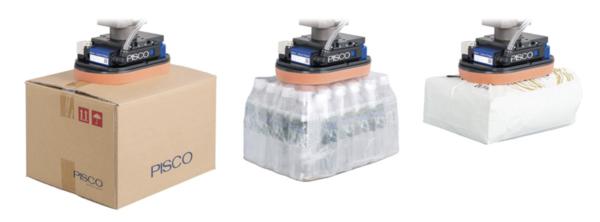
Vacuum suction cups are end-of-arm tooling (EOAT) components used in vacuum handling systems. They operate using negative pressure created by vacuum pumps or ejectors. When air is removed between the suction cup and the object surface, atmospheric pressure pushes the cup firmly against the object, creating a strong gripping force.
The vacuum difference between internal pressure and surrounding atmospheric pressure generates the holding force that allows machines or robots to lift and move objects safely.
Key Components of a Vacuum Handling System
A typical industrial vacuum handling system consists of:
Vacuum suction cup
Vacuum generator or vacuum pump
Tubing and fittings
Vacuum sensors or gauges
Mounting brackets and connectors
These components work together to create a reliable material-handling solution widely used in factory automation.
Why Industrial Companies Need Reliable Vacuum Suction Cups Suppliers
For industrial buyers and automation integrators, choosing the right supplier ensures:
1. Consistent Quality
Industrial suction cups must maintain reliable grip strength during continuous operation. Poor-quality products may lead to product drops, machine downtime, and production losses.
2. Wide Product Range
A good supplier provides multiple types of suction cups for different surfaces and materials, including:
Flat suction cups
Bellows suction cups
Foam suction cups
Oval suction cups
Deep suction cups
3. Technical Support
Engineering teams require guidance on selecting the correct cup size, material, and vacuum system configuration.
4. Custom Automation Solutions
OEMs and automation integrators often need customized vacuum grippers or complete vacuum handling systems.
Industrial Applications of Vacuum Suction Cups
Vacuum suction cups are widely used across multiple industries because they allow non-damaging handling of delicate products.
1. Robotics and Automation
Industrial robots frequently use suction cups for pick-and-place operations. The system enables robots to grab, transfer, orient, and place components accurately during production.
Applications include:
Electronics assembly
PCB handling
Smartphone manufacturing
Semiconductor handling
2. Packaging Industry
In packaging automation, suction cups are used for:
Carton handling
Bottle loading
Case packing
Label placement
Vacuum systems help increase speed and accuracy in packaging operations.
3. Automotive Manufacturing
Automotive factories use vacuum suction cups for handling:
Car body panels
Glass windshields
Interior components
Metal sheets
The technology ensures smooth and scratch-free handling.
4. Logistics and Warehouse Automation
Automated warehouses use suction cups to move:
Cartons
Packages
Plastic containers
Paper rolls
This improves warehouse efficiency and reduces manual labor.
5. CNC Machine Automation
Vacuum suction cups automate loading and unloading of parts in CNC machining centers, improving operator safety and productivity.
Types of Vacuum Suction Cups Used in Industry
Selecting the correct type of suction cup depends on workpiece material, shape, and surface conditions.
1. Flat Vacuum Cups
Best suited for:
Smooth surfaces
Glass
Metal sheets
Plastic panels
These cups provide strong holding force for flat objects.
2. Bellows Vacuum Cups
Bellows cups offer flexibility and shock absorption, making them ideal for:
Irregular surfaces
Height variations
Automated packaging
3. Foam Vacuum Cups
Foam cups are used for:
Rough surfaces
Wood panels
Cardboard boxes
They can handle porous materials with better sealing.
4. Oval Vacuum Cups
Oval cups are designed for narrow surfaces such as:
Long cartons
Profiled components
Small parts handling
Pisco Pneumatic
Still searching for food grade polyurethane tube india?
Auto Nagar Bus Stand, Vijayawada Rd, Auto Nagar, Vijayawada, Andhra Pradesh 520007, India

 Chat with us
 Chat with us