

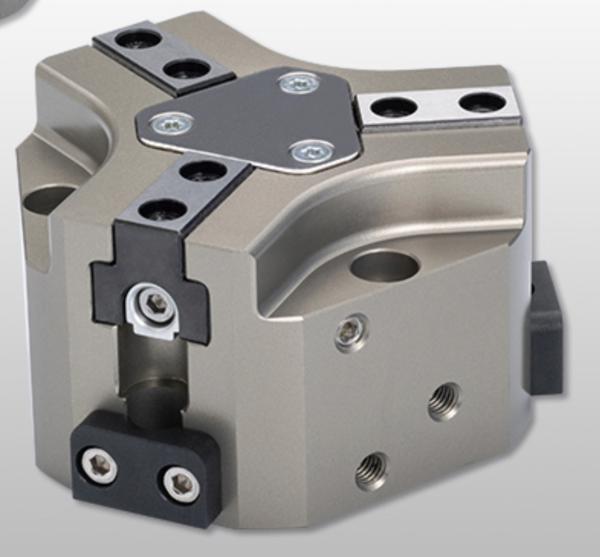
3-Jaw Pneumatic Grippers for Automation: A Practical Guide for Engineers In modern industrial automation, 3-jaw pneumatic grippers stand out as versatile end-of-arm tools for robotic handling systems. Designed to provide reliable and balanced gripping, these devices are critical when precision, speed, and repeatability are paramount—especially in assembly, material transfer, and packaging operations. What Is a 3-Jaw Pneumatic Gripper? A 3-jaw pneumatic gripper is a mechanical actuator that uses compressed air to drive three equally spaced fingers or jaws. Unlike two-jaw grippers, the three jaws create a symmetrical grip, improving stability when handling cylindrical or round parts such as shafts, bearings, bottles, and housings. Key Advantages Uniform Load Distribution: The three contact points ensure an even grip around the part, reducing slippage and minimizing deformation of delicate components. High Speed and Repeatability: Pneumatic actuation allows rapid open/close cycles, ideal for high-throughput robotic systems. Simple and Robust Design: Fewer moving parts compared to electric alternatives mean lower initial costs and easier integration. Design Considerations for Engineers When selecting or designing a 3-jaw pneumatic gripper, engineers should consider: Jaw Stroke and Range: Ensure the gripper’s opening range matches part size tolerances. Payload and Force Requirements: Calculate gripping force needed for part weight, friction, and inertia—especially during acceleration/deceleration in robot motion. Mounting and Interface: Standardized mounting patterns (ISO, OEM) simplify robot tool-changer integration. Air Consumption & Speed: Optimize air flow and actuation speed to balance cycle time with compressor load. Maintenance Best Practices Regular maintenance extends service life and prevents downtime: Inspect Seals and O-rings: Replace worn seals to avoid air leaks and reduced gripping power. Clean Jaws and Slides: Remove debris that could hinder motion or damage surfaces. Lubrication: Apply manufacturer-recommended pneumatic lubricant to maintain smooth jaw movement. Robotic Integration 3-jaw grippers are compatible with most industrial robots (articulated, SCARA, Cartesian). Integration requires careful calibration of grip force, robot trajectory, and part positioning to ensure safe, consistent handling.
Address
Surat City Bus Station, Surat Bus Station, Near Surat Railway Station, Surat, Gujarat 394230, India
Surat, India, 394230