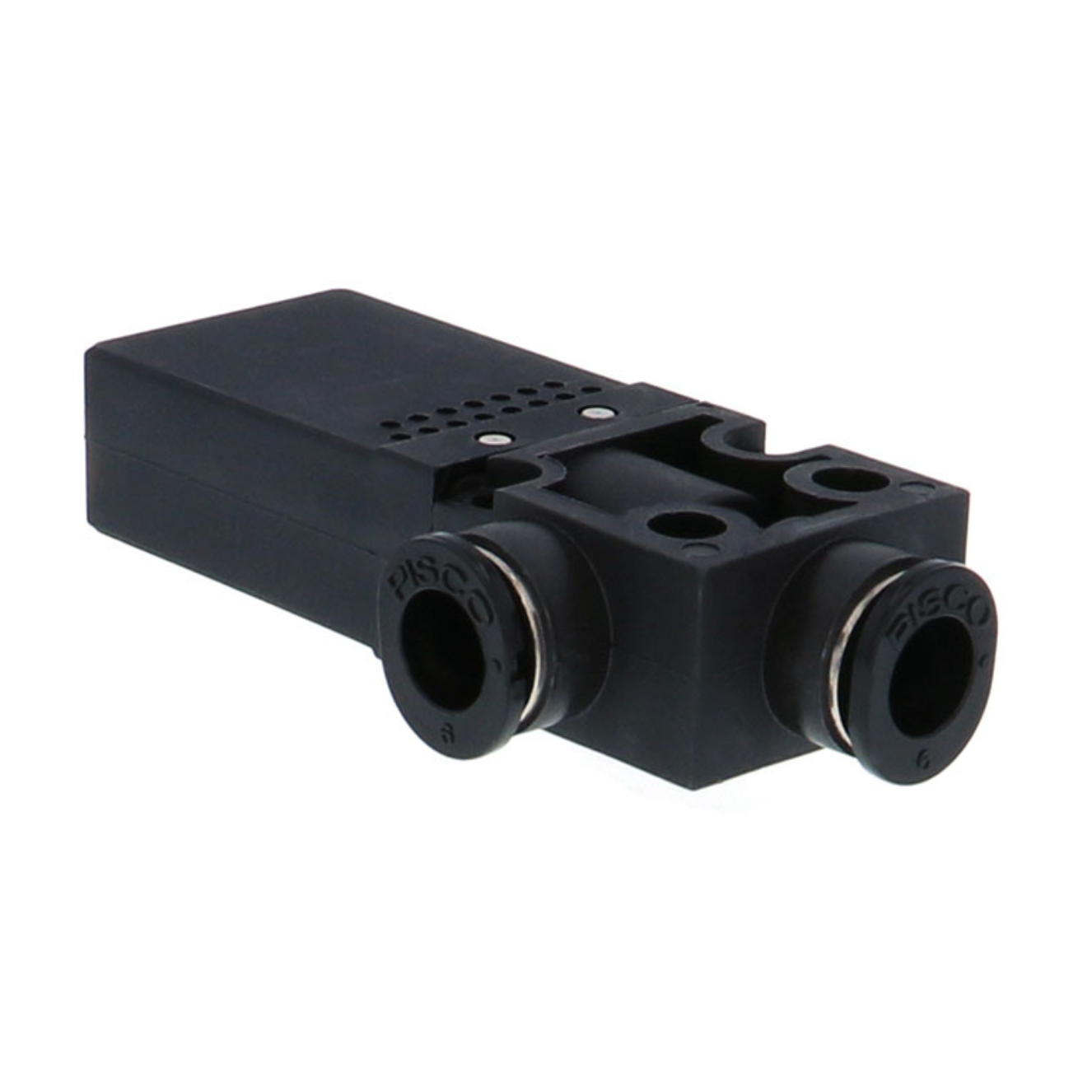
Comprehensive Guide for Engineers: PISCO Vacuum Generator VBH12-66P Kathmandu
Specifications, Applications, and Design Insights In modern industrial automation, vacuum systems play a vital role in material handling, pick-and-place tooling, and pneumatic automation lines. Among the compact and efficient ejector-style vacuum devices, the PISCO VBH Series stands out for its robust performance, minimal footprint, and reliable operation. One of the popular models in this lineup for engineers designing automation systems is the VBH12-66P Vacuum Generator.
What Is the VBH12-66P Vacuum Generator?
The VBH12-66P Vacuum Generator is a compact Venturi-type vacuum generator that converts compressed air into vacuum pressure using internal ejector nozzles. Its lightweight and modular design make it ideal for integration into automated pneumatic systems. Engineers typically use it for pick-up, transfer, and holding tasks in assembly lines.
Key Specifications (Engineered for Performance)
Feature Specification
Model VBH12-66P Vacuum Generator
Vacuum Flow Rate ~38 L/min (ANR)
Rated Supply Pressure 0.5 MPa
Operating Pressure Range 0.15 – 0.7 MPa
Vacuum Pressure (Max) -93 kPa
Air Consumption ~70 L/min (ANR)
Nozzle Diameter 1.2 mm
Vacuum Port Size φ6 mm
Air Supply Port Size φ6 mm
Weight ~18 g
Operating Temperature 0 – 60 °C
Fluid Medium Compressed Air
Country of Origin Japan
Body Shape Square compact union type
(Data based on manufacturer and distributor listings)
These compact ejector vacuum generators work on the Venturi effect — compressed air passes through a narrowed nozzle and expands, creating a low-pressure region. This draws air (and thus vacuum) from the vacuum port, enabling suction for handling objects without moving parts.
Why Engineers Choose the VBH12-66P
1. Space-Saving Design
The square, lightweight package (around 18 g) enables compact mounting directly on pneumatic manifolds or near end-of-arm tools (EOAT) where space is limited.
2. High Vacuum and Flow
With a vacuum pressure reaching approximately -93 kPa and suction flow up to 38 L/min, this generator provides effective gripping for a wide range of applications like sheet metal, plastic parts, and electronic components.
3. Wide Operating Pressure Range
The broad supply pressure range (0.15–0.7 MPa) allows flexibility in pneumatic system designs and adaptability with existing compressors and regulators.
4. Easy Installation & Low Maintenance
The union type body and push-in fitting vacuum and air ports make installation quick, reduce downtime, and simplify maintenance — a plus for engineers optimizing for uptime.
5. Durability & Industrial Reliability
Made by Pisco — a Japanese pneumatic components specialist — this vacuum generator offers consistent performance, long service life, and compatibility with international pneumatic standards.
Applications in Engineering Systems
The VBH12-66P and similar vacuum generators are widely used in:
Pick-and-Place Mechanisms: Robotic arms and automation end-effectors handling small to mid-sized parts.
Packaging Automation: Suction for boxes, wrappers, and pouches in high-speed production lines.
Electronics Manufacturing: Handling delicate PCBs, components, and assemblies without mechanical contact.
Assembly Lines: Temporary part holding in joinery, fastening, and assembly stations.
Medical & Lab Automation: Movement of vials, instruments, and lightweight parts under controlled vacuum.
Engineering Design Tips
Proper Sizing
Select a vacuum generator with appropriate suction capacity and vacuum level for your load. Undersized units may not generate enough holding force, while oversized ones increase air consumption unnecessarily.
Air Quality Matters
Use clean, dry compressed air with regulated pressure. Moisture or particles in the line can degrade performance and increase wear. Adding filters, regulators, and lubricators (FRL) upstream improves reliability.
Control and Sensors
To integrate with PLCs and automated systems, pair vacuum generators with vacuum switches or sensors. This provides real-time feedback for gripping confirmation and safety interlocks.
Energy Efficiency
While Venturi vacuum generators are compact and reliable, they consume compressed air continuously. For high-duty cycles, consider systems with vacuum reservoirs or electronically controlled vacuum ejectors for better energy efficiency.
Conclusion
For engineers in automation, robotics, and pneumatic system design, the PISCO Vacuum Generator VBH12-66P offers a balanced mix of compact design, high vacuum capability, and industrial reliability. It excels where space is limited, installation simplicity is important, and consistent performance is required. Its broad operating range makes it adaptable across many engineering applications — from manufacturing to laboratory automation.