Jaipur
08048054925
+919880566644
Pisco Pneumatic by PISCO

Vacuum suction cups in India

Subcategory Tags

Phone Number

08048054925

Please keep 0 before dialling the number.

Email Address raju.kn@ibizkart.com

Mon-Thu: 10 AM - 2 PM • Fri: 3 PM - 7AM

Other Website Visit our other website
Address Jaipur,Jaipur

Jaipur, India, 0

Description

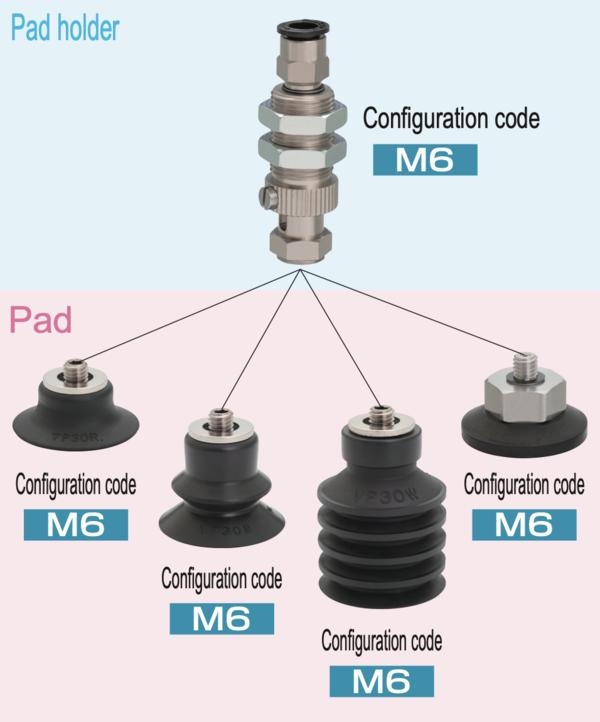
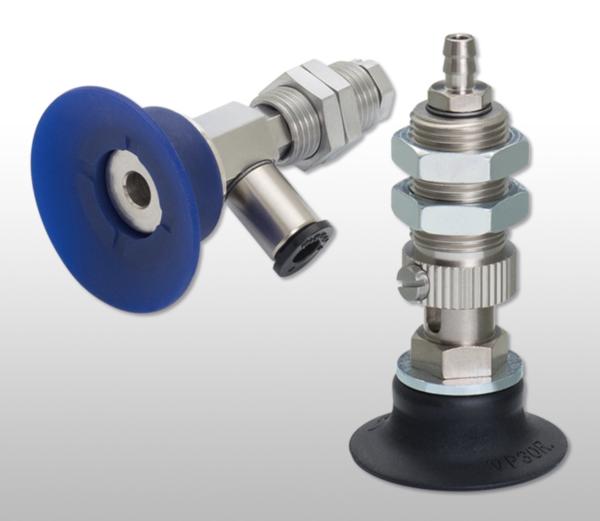
Vacuum Suction Cups Supplier: Complete Guide for Industrial Purchase, Design, and Maintenance Introduction In modern manufacturing and automation, vacuum suction cups play a crucial role in material handling, robotics, packaging, and assembly lines. Industrial buyers, design engineers, and maintenance professionals increasingly depend on reliable vacuum suction cups suppliers to ensure productivity, safety, and consistent performance in automated processes. Vacuum suction cups are essential components used with vacuum generators or pumps to grip, lift, and move objects without mechanical clamps. They are widely applied in industries such as electronics, automotive manufacturing, logistics, packaging, food processing, and pharmaceuticals. Selecting the right vacuum suction cups supplier is critical for companies seeking durability, performance, and cost efficiency in their automation systems. This comprehensive guide explains how vacuum suction cups work, how to select the right supplier, key design considerations, purchasing strategies, and maintenance best practices for industrial applications. What Are Vacuum Suction Cups? Vacuum suction cups are end-of-arm tooling (EOAT) components used in vacuum handling systems. They operate using negative pressure created by vacuum pumps or ejectors. When air is removed between the suction cup and the object surface, atmospheric pressure pushes the cup firmly against the object, creating a strong gripping force. The vacuum difference between internal pressure and surrounding atmospheric pressure generates the holding force that allows machines or robots to lift and move objects safely. Key Components of a Vacuum Handling System A typical industrial vacuum handling system consists of: Vacuum suction cup Vacuum generator or vacuum pump Tubing and fittings Vacuum sensors or gauges Mounting brackets and connectors These components work together to create a reliable material-handling solution widely used in factory automation. Why Industrial Companies Need Reliable Vacuum Suction Cups Suppliers For industrial buyers and automation integrators, choosing the right supplier ensures: 1. Consistent Quality Industrial suction cups must maintain reliable grip strength during continuous operation. Poor-quality products may lead to product drops, machine downtime, and production losses. 2. Wide Product Range A good supplier provides multiple types of suction cups for different surfaces and materials, including: Flat suction cups Bellows suction cups Foam suction cups Oval suction cups Deep suction cups 3. Technical Support Engineering teams require guidance on selecting the correct cup size, material, and vacuum system configuration. 4. Custom Automation Solutions OEMs and automation integrators often need customized vacuum grippers or complete vacuum handling systems. Industrial Applications of Vacuum Suction Cups Vacuum suction cups are widely used across multiple industries because they allow non-damaging handling of delicate products. 1. Robotics and Automation Industrial robots frequently use suction cups for pick-and-place operations. The system enables robots to grab, transfer, orient, and place components accurately during production. Applications include: Electronics assembly PCB handling Smartphone manufacturing Semiconductor handling 2. Packaging Industry In packaging automation, suction cups are used for: Carton handling Bottle loading Case packing Label placement Vacuum systems help increase speed and accuracy in packaging operations. 3. Automotive Manufacturing Automotive factories use vacuum suction cups for handling: Car body panels Glass windshields Interior components Metal sheets The technology ensures smooth and scratch-free handling. 4. Logistics and Warehouse Automation Automated warehouses use suction cups to move: Cartons Packages Plastic containers Paper rolls This improves warehouse efficiency and reduces manual labor. 5. CNC Machine Automation Vacuum suction cups automate loading and unloading of parts in CNC machining centers, improving operator safety and productivity. Types of Vacuum Suction Cups Used in Industry Selecting the correct type of suction cup depends on workpiece material, shape, and surface conditions. 1. Flat Vacuum Cups Best suited for: Smooth surfaces Glass Metal sheets Plastic panels These cups provide strong holding force for flat objects. 2. Bellows Vacuum Cups Bellows cups offer flexibility and shock absorption, making them ideal for: Irregular surfaces Height variations Automated packaging 3. Foam Vacuum Cups Foam cups are used for: Rough surfaces Wood panels Cardboard boxes They can handle porous materials with better sealing. 4. Oval Vacuum Cups Oval cups are designed for narrow surfaces such as: Long cartons Profiled components Small parts handling

Specifications

Color Black
Size 0.7 mm to 200 mm

Keywords

Other Products

view all

68179d65be22ee500d53ff54 Card 2

product image
Hiwin

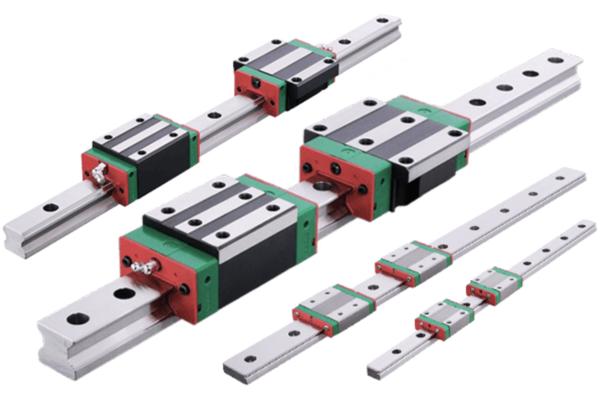
HIWIN Linear Guideways: The Ultimate Selection and Maintenance Guide (2026) In the world of precision automation, HIWIN linear guideways have become the industry standard for achieving high-positioning accuracy and smooth linear motion. Whether you are retrofitting a CNC machine or designing a high-speed semiconductor assembly line, choosing the right series is a balance between load capacity, space constraints, and environmental factors. 1. Understanding the Core Technology A HIWIN linear guideway consists of a profile rail and a bearing block (carriage). The magic happens within the block, where recirculating rolling elements (balls or rollers) minimize friction to a coefficient of roughly 1/50th of a traditional sliding guide. Why HIWIN? Equal Load Capacity: Most series (like the HG and EG) are designed to handle loads in radial, reverse-radial, and lateral directions equally. Self-Alignment: HIWIN’s circular-arc groove design can absorb small installation errors, ensuring smooth motion even if the mounting surface isn't perfectly flat. Interchangeability: High manufacturing standards allow you to replace blocks or rails independently while maintaining precision. 2. Choosing the Right Series: A Comparison Not all linear guides are created equal. Using an oversized rail wastes money and space, while an undersized one leads to premature “pitting“ or failure. Series Type Primary Feature Best For HG Ball Heavy load, high rigidity CNC machines, grinding, heavy-duty lathes. EG Ball Low profile, compact Packaging, high-speed automation, robotics. RG Roller Extreme rigidity Heavy cutting, high-precision milling. MG Ball Miniature, stainless steel Medical devices, semiconductor, 3D printers. WE Ball Wide rail, high moment Single-axis applications with high torque. Technical Insight: Balls vs. Rollers The HG series uses steel balls, providing a “point contact“ that excels in speed and lower friction. The RG series uses cylindrical rollers, creating a “line contact.“ This significantly increases the contact area, reducing elastic deformation and making it the “gold standard“ for heavy-duty industrial machining where vibration must be zero. 3. High-Tech Options: SynchMotion™ & Cover Strips For advanced 2026 applications, two specific HIWIN innovations are worth the investment: SynchMotion™ (QH/QE/QR Series): These blocks include a “ball separator“ between the rolling elements. This prevents ball-to-ball friction, leading to quieter operation, higher speeds, and longer lubrication intervals. Cover Strips (CG Series): Traditional rails have mounting holes that can collect dust. The CG series features a stainless steel cover strip that snaps over the rail, providing a completely smooth surface for the seals to glide over, drastically extending life in “dirty“ environments like woodworking. 4. Maintenance: The “100km Rule“ Most end-user failures are not due to load, but lack of lubrication. Lubrication Schedule Linear guides should be relubricated every 100km of travel or every 3 to 6 months, whichever comes first. If you are operating in a high-dust environment (e.g., carbon fiber routing), this interval should be halved. Tips for Longevity: Check the Wipers: If the rubber end-seals on your block look cracked or worn, replace them immediately. A $10 seal protects a $500 rail system. Grease Type: Use a lithium-soap-based grease (like HIWIN G05) for general applications. Avoid mixing different types of grease, as chemical incompatibility can cause the lubricant to harden. Initial Pre-greasing: New blocks often come with only a light coat of anti-rust oil. Always perform an initial lubrication before running the system under load. 5. Avoiding Common Installation Mistakes Expert experience shows that alignment is everything. The Master Rail: Always designate one rail as the “master“ and align it to a reference shoulder on your machine bed. The “subsidiary“ rail should then be aligned relative to the master. Torque Spec: Use a calibrated torque wrench. Over-tightening mounting bolts can slightly deform the rail, causing “binding“ and localized wear. Parallelism: For a dual-rail setup, parallelism should usually be within 0.01mm to 0.05mm (depending on the series and preload). Pro Tip: If your machine “shudders“ or makes a clicking sound at certain points, it’s likely a parallelism issue. Loosen the subsidiary rail bolts, run the carriage across the full stroke, and re-tighten. Conclusion HIWIN linear guideways offer a versatile, high-performance solution for almost any motion challenge. By matching the series (HG for power, EG for speed, RG for stiffness) to your specific needs and sticking to a rigorous lubrication schedule, you can ensure your machinery operates with micron-level precision for years.

68179d65be22ee500d53ff54 Card 2

product image
Pisco Pneumatic

Gemini said High-Performance Vacuum Suction Cups: The Heart of Robotic Automation In the world of high-speed packaging, the smallest component often carries the heaviest load. Vacuum suction cups are the critical interface between a robotic arm and the product, determining the speed, safety, and reliability of an entire production line. Precision Engineering for Packaging Whether you are handling porous cardboard, flexible pouches, or delicate glass, selecting the right material is paramount. Silicone: Ideal for extreme temperatures and food-grade applications. Nitrile (NBR): The workhorse for oily environments or heavy-duty wear. Polyurethane: Offers maximum tear resistance for high-friction movements. Optimizing Robotic Efficiency Modern vacuum suction cups for robots are designed to minimize “cycle time.“ Using bellows-style cups provides a “lifting“ effect that compensates for height differences and uneven surfaces, while flat cups offer the stability needed for high-acceleration “pick and place“ tasks. +1 Why EEAT Matters in Vacuum Technology When sourcing industrial components, Experience and Expertise are non-negotiable. Using sub-standard cups leads to “drop incidents,“ increasing downtime and cost. Leading manufacturers now integrate sensing technology directly into the vacuum manifold to provide real-time feedback on seal integrity.

68179d65be22ee500d53ff54 Card 2

product image
Pisco Pneumatic

Suction Cups for Packaging Automation Packaging lines are notorious for high cycle speeds and dusty environments. When selecting cups for this sector, consider: Porosity Handling: Cardboard is naturally porous. To maintain a grip, you need high-flow vacuum generators or cups with specialized foam seals. Food Safety: If the cup touches raw or packaged food, it must be FDA-compliant and often “detectable“ (impregnated with metal fragments) so it can be caught by X-ray scanners if a piece breaks off. High-Speed Stability: In “delta“ style picking robots, the cup must resist lateral forces to prevent the product from swinging or dropping during rapid directional changes.