Thank you for writing to us. One of our executive will reach back to you through your submitted medium. In case there’s an urgency, feel free to connect over WhatsApp for faster response.
Vacuum Suction Cups for Automation: A Practical Guide for Engineers and Maintenance Teams
In modern automated manufacturing, vacuum suction cups are essential end-of-arm tooling components used in material handling, robotics, and pick-and-place systems. Selecting the right suction cup and maintaining it properly can significantly improve system reliability, throughput, and product quality.
What Are Vacuum Suction Cups?
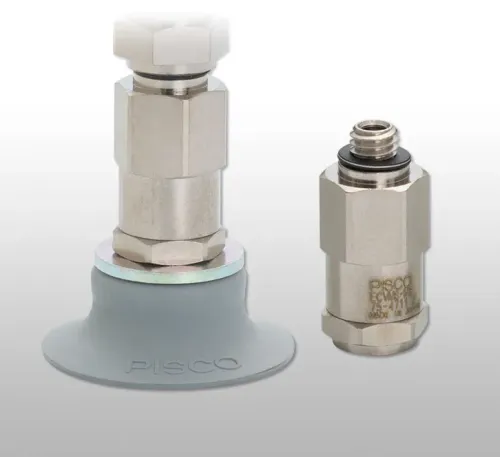
Vacuum suction cups are flexible sealing elements that use negative pressure to grip and lift objects. They are typically mounted on robotic arms, gantry systems, or vacuum lifters and connected to a vacuum generator (pump or venturi). When air is evacuated from beneath the cup, the resulting pressure differential creates a grip on the workpiece surface.
Key Design Considerations
1. Material Compatibility
Suction cups are made from elastomers such as NBR (nitrile), silicone, EPDM, and PU.
NBR: Good general-purpose choice—oil and abrasion resistant.
Silicone: Excellent for high-temperature applications and delicate surfaces.
EPDM: Weather and ozone resistant—ideal for outdoor or humid environments.
PU: Long life in abrasive applications.
Design engineers should match material properties to surface type, temperature range, and chemical exposure.
2. Shape and Geometry
The shape affects seal performance and adaptability:
Flat cups: Best for smooth, flat surfaces.
Bellows cups: Provide flexibility for uneven or angled surfaces.
Oval/rectangular cups: Useful for long or odd-shaped parts.
Correct geometry ensures maximal contact area and stable grip force.
3. Size and Surface Contact
Suction cup diameter influences holding force:
Larger cups increase force but require more vacuum volume.
Small cups are faster to actuate and ideal for rapid cycles.
Engineers must balance force needs against system vacuum capacity.
Integration with Automation Systems
Vacuum cups must be integrated with:
Vacuum generators (electric or pneumatic)
Vacuum sensors and switches (for presence detection)
Flow control valves (for precise control in multi-cup arrays)
Proper control and feedback ensure repeatable pick-and-place performance and reduce cycle times.
Maintenance Best Practices
Routine maintenance extends suction cup life and prevents downtime:
Inspect for wear and tear: Replace cups showing cuts, tears, or deformation.
Clean surfaces regularly: Dust and debris reduce seal quality and holding force.
Check vacuum levels: Use sensors to verify adequate vacuum and detect leaks.
Monitor cycle counts: Replace cups proactively based on usage cycles.
Common Failure Modes
Air leaks around the seal due to dirt or wear
Material degradation from heat, chemicals, or UV exposure
Loss of grip force due to improper sizing or vacuum supply limitations
Conclusion
Vacuum suction cups are simple in concept but critical in automation. Right selection, correct integration, and consistent maintenance ensure high productivity and reduced unplanned downtime. For engineers and maintenance teams alike, understanding suction cup behaviour and limitations is key to robust automated handling systems.
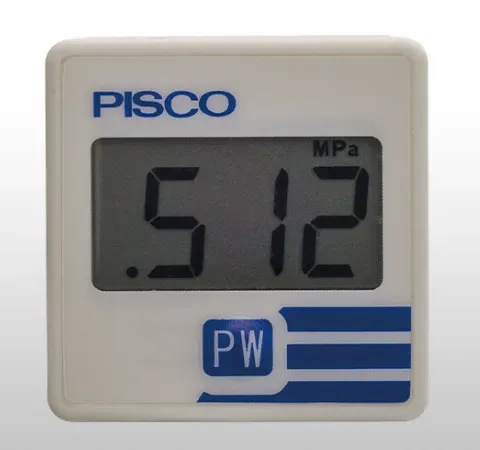
PISCO Digital Pressure Gauge delivers accurate positive and vacuum pressure measurement for pneumatic and industrial automation systems. Featuring a clear digital display, IP65 protection, low power consumption, and reliable performance, it is ideal for OEMs, machine builders, robotics, packaging, CNC, and process industries across India. Choose PISCO pressure gauges from IBK Engineers for precision, durability, fast support, and automation solutions.