Thank you for writing to us. One of our executive will reach back to you through your submitted medium. In case there’s an urgency, feel free to connect over WhatsApp for faster response.
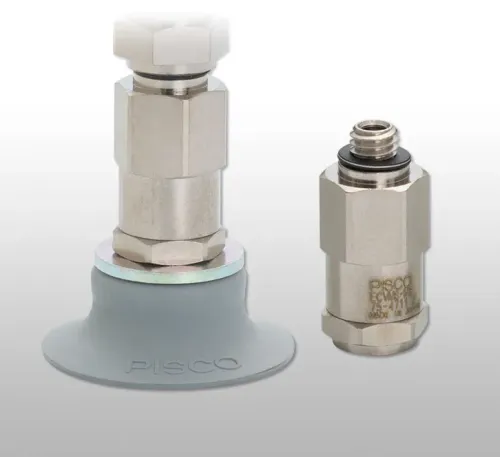
Brass High-Pressure Push-In Fittings Now Available in India
Technical Perspectives on Die Design, Die Maintenance & Injection Molding Benefits
Push-in fittings have long been integral components of pneumatic, fluid handling, and automation systems. With Brass High-Pressure Push-In Fittings now becoming available in India, design engineers and production teams have a powerful new option that combines strength, reliability, and ease of assembly. This article explores the technical aspects of integrating these fittings into plastic part production—specifically in relation to die design, die maintenance, and injection molding processes—along with the core benefits of brass high-pressure push-in fittings.
1. Introduction to Brass High-Pressure Push-In Fittings
Push-in fittings are connectors that allow tubes and hoses to be connected to pneumatic or fluid systems without the need for threaded or clamped joints. Traditional push-in fittings are often made from composite or lower-grade metals. Brass high-pressure variants, by contrast, bring enhanced strength and durability, especially suitable for heavy duty industrial applications requiring elevated operating pressures and frequent connect/disconnect cycles.
2. Relevance to Die Design & Injection Molding
When designing dies and injection molded parts that incorporate fluid or pneumatic connections, engineers must consider multiple factors:
2.1 Compact & Precise Integration
High-pressure brass push-in fittings are compact and standardized, making them easier to integrate into molded parts without redesigning entire manifolds. In applications such as:
Pneumatic manifold blocks
Multi-port fluid panels
Automated actuator interfaces
these fittings help maintain tight dimensional tolerances in molded parts.
2.2 Material Compatibility
During injection molding, design engineers often encounter issues related to material shrinkage, thermal expansion, and molding stresses around insert features. Using brass fittings:
Provides dimensional stability
Reduces the risk of deformation around connection points
Minimizes post-molding rework
2.3 Mold-In Place Inserts
Brass fittings can be incorporated as mold-in place inserts. Die designers can create cavities or housings to press fit, overmold, or encapsulate these fittings with engineering polymers, ensuring:
Leak-proof seals
Structural strength
Precise alignment with external tubing
3. Die Maintenance (Die Matinee) Considerations
Proper die maintenance ensures consistent part quality, reduces downtime, and protects expensive tooling. High-pressure brass push-in fittings can influence maintenance processes in the following ways:
3.1 Reduced Wear on Tooling
Precision-made brass fittings reduce vibration and stress on contacting die surfaces.
Brass does not gall or corrode parts of the mold as aggressively as some metals under high loads.
3.2 Simplified Cleaning
In dies where pneumatic controls or cooling circuits are integrated, brass push-in fittings enable:
Easy disassembly of supply lines for cleaning
Quicker replacement of compromised tubing without removing entire manifolds
3.3 Fewer Die Failures
With robust high-pressure connections:
Leakage inside the die cavity is minimized
Cooling channel performance is stabilized
The die experiences less thermal variation due to stable fluid delivery
4. Injection Molding Process Benefits
In production environments where speed, repeatability, and reliability matter, brass high-pressure push-in fittings contribute the following benefits:
4.1 Higher Operating Pressure Capability
Brass fittings typically handle much higher working pressures compared to plastic or composite alternatives, enabling:
Higher force pneumatic actuators
Denser cooling circuits
Greater process control in hot runner systems
4.2 Enhanced Chemical & Temperature Resistance
Brass resists:
Corrosion from coolant additives
Thermal cycling
This translates to longer lifetime in high-temperature mold environments.
4.3 Ease of Assembly
Push-in design allows operators to:
Connect tubing quickly
Eliminate threaded assembly tools
Reduce assembly time and human error
5. Specific Benefits of Brass High-Pressure Push-In Fittings
Benefit Impact on Manufacturing
Strength & Durability Reduced replacement costs; withstands industrial environments
High Pressure Handling Supports advanced automation and fluid control systems
Corrosion Resistance Longer lifespans, especially in cooling/fluid systems
Ease of Installation Faster setup, reduced labor, lower assembly error
Reusability Lower total cost of ownership (TOC) over multiple cycles
Reliable Sealing Minimizes leaks that can degrade part quality
6. Applications in Indian Manufacturing
With these brass fittings now available locally in India, several sectors stand to benefit:
Automotive & Auto Components
Pneumatic controls, cooling circuits, fuel line prototypes
Industrial Automation
Servo valves, actuators, robotic tooling
Plastic Processing & Packaging
Mold cooling networks,
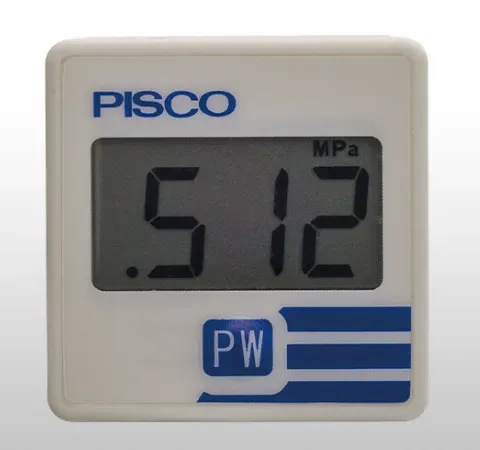
PISCO Digital Pressure Gauge delivers accurate positive and vacuum pressure measurement for pneumatic and industrial automation systems. Featuring a clear digital display, IP65 protection, low power consumption, and reliable performance, it is ideal for OEMs, machine builders, robotics, packaging, CNC, and process industries across India. Choose PISCO pressure gauges from IBK Engineers for precision, durability, fast support, and automation solutions.