Thank you for writing to us. One of our executive will reach back to you through your submitted medium. In case there’s an urgency, feel free to connect over WhatsApp for faster response.
Vacuum Generators for Automation: A Practical Guide for Design & Maintenance Engineers
Vacuum generators play a critical role in modern industrial automation, especially in pick-and-place systems, robotic handling, packaging, CNC loading, and material transfer. By converting compressed air into vacuum, these compact devices enable fast, reliable, and energy-efficient gripping without complex mechanical systems.
What Is a Vacuum Generator?
A vacuum generator (also called an ejector) uses the Venturi principle to create vacuum. When compressed air passes through a specially designed nozzle, it accelerates and creates a low-pressure zone, which generates suction. This vacuum is then used with suction cups or vacuum pads to lift, hold, or move objects.
Compared to vacuum pumps, vacuum generators are lighter, faster, and maintenance-friendly, making them ideal for decentralized automation setups.
Key Advantages in Automation Systems
For design engineers, vacuum generators offer several important benefits:
Compact design: Easily integrated close to the point of use, reducing vacuum loss.
Fast response time: Ideal for high-cycle robotic and packaging applications.
Scalability: One generator per suction cup or zone for better control.
No moving parts: Higher reliability and longer service life.
For maintenance engineers, these features translate into fewer breakdowns, simple troubleshooting, and minimal downtime.
Selection Criteria for Design Engineers
Choosing the right vacuum generator is essential for system efficiency:
Air consumption vs. vacuum flow: Optimize to reduce compressed air costs.
Vacuum level: Higher vacuum is needed for smooth or airtight materials like glass or metal sheets.
Integrated functions: Models with built-in vacuum switches, blow-off, or silencers simplify system design.
Material compatibility: Aluminum, resin, or stainless steel options for food, pharma, or corrosive environments.
Proper sizing at the design stage prevents energy wastage and ensures consistent performance.
Maintenance & Reliability Considerations
From a maintenance perspective, vacuum generators are easy to manage:
Minimal wear parts: No motors or rotating elements.
Clog-resistant designs: Built-in filters protect against dust and debris.
Quick replacement: Plug-and-play fittings reduce service time.
Predictive maintenance: Vacuum sensors help detect leaks or suction loss early.
Regular inspection of air quality, filters, and suction cups significantly improves system uptime.
Typical Industrial Applications
Vacuum generators are widely used across industries:
Packaging and carton handling
Automotive body and component handling
Electronics and PCB assembly
Sheet metal and glass handling
Plastic injection molding part removal
Their flexibility makes them suitable for both light and heavy automation tasks.
Conclusion
Vacuum generators are a smart choice for automation engineers looking for efficient, compact, and reliable vacuum solutions. With correct selection and basic maintenance practices, they deliver long service life, energy savings, and high system productivity. For both design and maintenance teams, vacuum generators simplify automation while ensuring consistent and precise material handling.
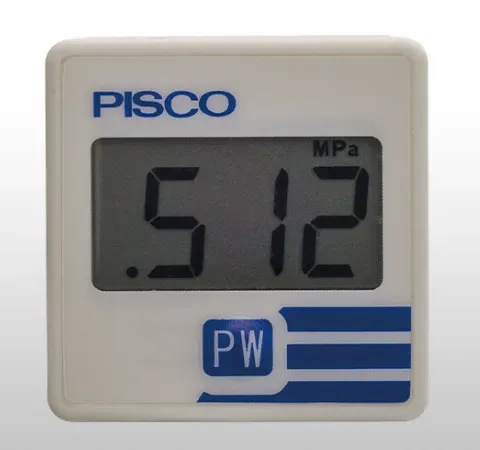
PISCO Digital Pressure Gauge delivers accurate positive and vacuum pressure measurement for pneumatic and industrial automation systems. Featuring a clear digital display, IP65 protection, low power consumption, and reliable performance, it is ideal for OEMs, machine builders, robotics, packaging, CNC, and process industries across India. Choose PISCO pressure gauges from IBK Engineers for precision, durability, fast support, and automation solutions.